Import, Beli, Jual & Ternak Kambing Boer ; Reka & Bina Kandang

*****************************************************************************中文*

Segamat Flood-Dec 2007 (1)

Banjir di Jalan Kg Tunku Tiga, Segamat
Photo taken on 10-Dec-2007 morning


World Market Opportunities for Meat Goats

World Market Opportunities for Meat Goats
(source : http://www.goatindustries.com/goat_meat_world_markets.htm)

The Boer goat, over the past few years, has become the main source of genetic material for goat meat production in many third world countries as well as developed economies such as in the United States, New Zealand and Australia. As its name implies, the Boer goat comes from South Africa. However, the name is really a brand that has been applied to genetic improvements made to wild goats found in Africa and parts of India.

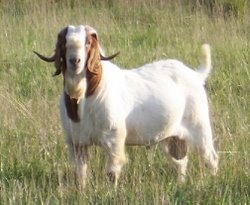
A general description of the Boer goat provided by the Boer Goat Association of Australia (1995), is that it generally has a large frame and in color is red headed with a white body. Mature live-weights are between 105 and 135 kg. for males and 90 to 100 kg. for females. Under intensive performance tested conditions, males averaged 36 kg. at 3 months, 72 kg. at 8 months and 100 kg. at 12 months. Females averaged 28 kg. at 3 months and 63 kg. at 12 months. Boer goats are capable of attaining an average daily gain of over 350 grams in feedlot situations. The Boers average daily gain potential on pasture or range-land is outstanding and offers great possibilities for selecting to improve growth rates.
          Other ideal production characteristics of the Boer goat include:
        • Early maturity. Boer goat bucks reach sexual maturity at live weights of 33kg at three months of age and does at 30 kg. at the same age.
        • High weaning weights.
        • High carcass dressing percentage (48-60% depending on age).
        • High average daily weight gains of 0.225kg per day up to 6 months).
        • Prolific breeder (180% to 200% weaned kid crop per year).
        • Extended breeding system (potentially 3 kiddings every two years).
        • Gentle disposition.
        • Exceptional mothering and milking abilities for a specialised meat goat.
        • Hardy and disease resistant

Complementary in Production

Apart from replacing sheep or cattle in north east Victoria, Boer goats can be complementary. For example, say a farmer was running 6 to 12 dry sheep equivalents (dse's) of sheep or cattle, it would be possible to add one or two dse's of goats per hectare without interfering with the productivity of the sheep or cattle activity. Casey and Van Niekirk (1988), and Glimp (1995) explained that this was possible because goats have different foraging preferences to sheep and cattle and initially tend to utilise the more fibrous of the available plant material. Eventually, as more dse's of goats were added, they would start to compete with sheep or cattle for available pasture and the choice of activities would depend on whichever of the competitive activities was the most profitable. The main point is that graziers could add a small number of goats to their existing farming activities with a resulting increase in the overall profit from the farm.

Markets

According to Holst (1990), the majority of goat meat produced in Australia is derived from feral goats and most of this is exported. In fact, Australia dominates the world trade for exports of goat meat. Basically, demand is for two types of goat meat: Capretto which is milk fed kids with dressed weights ranging from 7 to 10 kilogram, and Chevon which comes from young goats with liveweights between 12 and 25 kilograms.

Table 1 shows the country of destination for exports of goat meat and the number of tonnes exported.

Table 1. Destination and amounts in tonnes for exports of Australian Goat Meat from 1995 to 1998.

      Destination
    Year

    1995
    (tonnes)
    1996
    (tonnes)
    1997
    (tonnes)
    1998
    (tonnes)
      Taiwan
    4,121
    5,374
    4,930
    4,472
      USA
    2,359
    1,955
    2,999
    4,002
      Caribbean
    1,931
    1,173
    1,681
    1,124
      Malaysia
    842
    997
    1,228
    1,280
      Canada
    839
    506
    546
    506
      Japan
    155
    130
    218
    178
      South Korea
    819
    657
    246
    53
      Singapore
    286
    634
    238
    21
      Middle East
    74
    95
    0
    11
      Total
    12,463
    12,107
    11,900
    10,924
Source: Australian Goat Report January 1999.

From Table 1, the following trends will be noted. There has been a substantial increase in exports to USA, particularly in 1998. Taiwan, Malaysia, and Canada are more or less holding, but declines have been experienced in exports to Carribean countries, Japan, South Korea, Singapore, and destinations in the Middle East. Over the 5 year time period there has been a 12.3 per cent decline in exports.

Exports comprise 85 per cent in carcass form with the remainder being as bone-in and bone-out cuts. In 1998, frozen product amounted to 99.9 per cent of exports with just 7 tonnes being shipped as chilled carcasses to the West Coast of USA, Malaysia and Taiwan.

Market research has shown that there will be an ongoing demand for goat meat in Australia's traditional markets of Malaysia, Singapore, and Taiwan. This market is comprised of both feral and farmed product. However, as the source of feral goats becomes scarcer, the importance of farmed goats will increase. Further, whilst the market from North America is expected to be for delivery on a continual basis, the Asian market will continue to be of a seasonal nature since consumption of goat meat in those countries is often based on demand for religious ceremonies (Department of Primary Industries 1997).

In addition to exporting carcasses and goat meat cuts, Australia is also a major participant in the export market for live goats delivered to the United Arab Emirates. The main competitors in this market are Iran and Somalia.

Market Segmentation

Goat meat producers in north eastern Victoria should target the USA market, particularly the East Coast, which has grown at a faster rate than the West Coast market. One of the key parts of the USA market appears to be the middle class community, who frequently dine out at ethnic restaurants. Success in this will occur through meeting the market's needs with respect to quality, quantity and timeliness of deliveries. The latter will dictate the need to have an agreed policy with a reliable export transport agency.

Market Branding and Positioning

A keen group of goat meat producers should aim to work together in a spirit of co-operativeness. The group should form a strong link in the marketing chain with a known existing exporter of goat meat. Together they should concentrate on supplying the market with high quality, chilled goat meat, probably as prepared cuts. It will be extremely important for market success that the exported product is clearly branded and positioned as being for example derived from the 'sunny gourmet pastures of north east Victoria.'

Market Success

Success will ultimately occur from the various links in the marketing chain having a strong commitment to paying strict attention to meeting the special needs of the market in terms of production, processing, and timely delivery of superior quality goat meat.

KTL Farm Sdn Bhd

KTL Farm Sdn Bhd (758659-P)

Farm : Lot 2177 & 2173 G.S.A. Jabi, Kg Tengku Tiga, 85000 Segamat, Johor.
HandPhone : 019-337 8803 (Ricky), 019-222 8803 (Poh),
019-334 8803 (Hee), 016-339 8803 (San)

Email : ktlfarm@gmail.com, TernakBoer@gmail.com


Location : Satellite view from Google Earth

Boer Goat - Wikipedia

The Boer goat was developed in South Africa in the early 1900s for meat production. Their name is derived from the Dutch word "Boer" meaning farmer. The Boer goat was probably bred from the indigenous goats of the Namaqua Bushmen and the Fooku tribes, with some crossing of Indian and European bloodlines being possible. They were selected for meat rather than milk production; due to selective breeding and improvement, the Boer goat has a fast growth rate and excellent carcass qualities, making it one of the most popular breeds of meat goat in the world. Boer goats have a high resistance to disease and adapt well to hot, dry semi-deserts. U.S. production is centered in west-central Texas, particularly in and around San Angelo. The original US breeding stock came from herds located in New Zealand. Only later were they imported directly from South Africa.

Boer goats commonly have white bodies and distinctive brown heads. Like the Nubian goat, they possess long, pendulous ears. They are noted for being docile, fast growth, and having high fertility rates. Does are reported to have superior mothering skills as compared to other goats. Mature Boer bucks weigh between 110-135 kg (240-300 lb), and mature does between 90-100 kg(200-220 lb).

The Economic Value of The Boer Goat

(Information from http://studbook.co.za/Society/B.Goat/value.php)

Economical farming implies profitable farming, in other words the more profit you make out of your farming enterprise, the more economical or profitable it is. The livelihood of the farmer thus depends on his farming with that animal or crop which will ensure that he receives the highest possible yield and profit in the climatic and soil conditions applicable to his circumstances. He also depends on optimal utilisation of each natural source, in such a way that the resource in question will not deteriorate as result, but will rather be improved over the long term. The Boer goat fulfils the above aims in the following ways in terms of its characteristic features:

MEAT AND PELTS OF A HIGH QUALITY
Considered in the light of the health-consciousness that prevails on a worldwide basis, the Boar goat yields lean meat of a high quality, particularly during the young stage. The meat is flavoursome, succulent, tender, extremely attractive and very tasty. Currently, the meat is much sought after for barbecue and spit roasting purposes. For this reason, goats should be marketed between the ages of 6 and 15 months, and carcasses should weigh no more than 23 kg. Older goats in good condition yield biltong (dried meat) and dried sausage of very good quality, which can definitely compete with the very best on the market.
In the light of the predilection for the Boer goat meat displayed by certain consumers in South Africa and the rest of the world, along with the characteristics required for the right type of meat for the health-conscious sector of consumers worldwide, one cannot do otherwise than predict a rosy future for Boer goat meat originating from goats of a high quality.
The results achieved by Boer goats, expressed in percentages, are very good, fluctuating between 48% and 60%. These results are narrowly linked to the age and more particularly the quality of the animals.

Ewe 15 months.

Live mass: 54 kg

Carcass weight: 29 kg

Carcass percentage: 54%

THE PELT
The pelt of the Boer goat has a low leather value in comparison with that of other small stock breeds. An endeavour should be made to breed goats with short, smooth hair, since this increases the quality of the pelt. The pelts of Boer goats are used for making the uppers of shoes, as well as for gloves and the covers of books.

HARDY AND ADAPTABLE


The Boer goat is undoubtedly one of the hardiest small stock breeds on earth, with a great capacity for adoption. It is therefore encountered in a great variety of climatic - and pasture - conditions and is consequently fit for conditions varying from extensive to intensive. The Boer goat is an excellent walker, has sturdy legs and moves easily in rugged mountainous areas and through dense bush.
During drought conditions, the Boer goat probably survives longer than most other animals without supplementary feeding or feed.


RESISTANCE TO DISEASES


The Boer goat also has an exceptional ability to withstand and resist diseases such as blue tongue, prussic acid poisoning and, to a lesser extent, enterotoxaemia (pulpy kidney). As far as is known, Boer goats do not contract blue tongue at all. Their grazing habits also make them less susceptible to infection caused by internal parasites, since Boer goats prefer to graze above the ground, if such grazing is available. Such as bushveld or scrub vegetation.

FERTILITY AND KIDDING PERCENTAGE
The Boer goat is very fertile and is not seasonally bound. Furthermore, multiple births are the rule rather than the exception, with an average kidding percentage of 180.
These two important economic characteristics have made the Boer goat very popular for the following reasons:

  • Because the Boer goat is not seasonally bound, the kidding season can be selected to fit in with the period when food is most plentiful; or, under intensive conditions, kidding can occur every 7-8 months.
  • Its exceptionally high kidding percentage implies that the Boer goat cannot be surpassed with regard to the percentage of meat per kilogram per ewe or per hectare. This factor places the Boer goat very high on the ranking list with regard to intensive farming.


ABUNDANCE OF MILK
Growth rate is linked to sufficient milk production and good nurturing instincts in ewes with regard to their young.
An ewe has enough milk to raise two kids rapidly.

LONGEVITY
The Boer goat is able to maintain economic production up to the age of approximately 10 years. This implies that the percentage of young replacement ewes which have to be withheld, is very low.

GRAZING HABITS

Goats prefer small trees and shrubs as their basic diet, but their exceptional economic value lies precisely in the fact that they are able to utilise certain plants which are less appetising to other stock breeds.

Experiments undertaken at Omatjenne Experimental Farm in Namibia have proved that a Boer goat consumes 74 % leaves and 26% grass. As a result, it is possible to farm with cattle and Boer goats simultaneously without their being in competition with each other to any great extent, so that a maximum number of kilograms of meat per hectare can be produced. As a result of the grazing habits of the Boer goat, it can be successfully incorporated in this way in order to utilise bushes and shrubs, and thus to assist in controlling encroachment.
When one considers all these characteristics of the Boer goat along with all the space available in South Africa, as well as abroad, where Boer goats could be successfully accommodated, it is natural to assume that this industry will but grow in the future.

The world's most heart friendly red meat

Goat meat is the today’s choice for people who want a healthier lifestyle. Not only does it provide flavour and culinary versatility, it is naturally lean and nutritious, and an excellent source of protein and iron. Compared with other popular meats, goat meat is by far the healthiest. It has the lowest fat, saturated fat and cholesterol content making it ideal for the health conscious.

Nutrient Analysis of popular meats


Meat Chart courtesy of South African Boer Goat Association

Goodness, the Boer Goat

From The Star... Sunday Metro, 19 Aug 2007

http://www.boervalley.com/WebLITE/applications/productcatalog/uploaded/pics/PR_009_TheStarOn19_08_2007.jpg

By RENITA CHE WAN


renita@thestar.com.my

Care for some chevon, cabrito or capretto?

FORGET everything you’ve been taught about mutton. Contrary to what we have been told at school, goat meat is not mutton. Lamb meat is.

Goat meat is actually known as chevon, cabrito or capretto – depending on the ages of the goats when they are slaughtered.

And did you know that compared to other meat like beef, poultry and pork, goat meat is extra lean, with 3g of fat or sometimes less, and has less than 2g of saturated fat?

Eating healthy: A Boer goat munching on the Napier grass at the organic farm in Tapah.
This is especially true of Boer goat meat. Production of the Boer goat meat was developed in South Africa in the early 1900s. The word “Boer” actually means “farmer” in Dutch. Because of the manner in which they are reared, Boer goats provide meat that is naturally lean and nutritious.

Not only is it an excellent source of protein and iron, Boer goat meat also has higher potassium content, with a low sodium level.

A place that rears Boer goats is the 20-acre Highland Organic Boer Farm in Tapah, Perak. It is managed by Majestic Nature Boer Farm Sdn Bhd.

The farm rears over 2,000 Boer goats which are put on a strict 100% organic diet.

They are fed naturally grown Napier grass to ensure that they receive the optimal intake of fibre and protein.

Apart from that, they also consume clean mineral water that comes from the same source that feeds the Lata Kinjang waterfall near the farm. Considering all the above factors, this probably explains why Boer goat meat is much healthier than other red meat.

According to Majestic Nature Boer Farm managing director Yeow Joo Kwang, the Highland Organic Boer Farm provides a clean and dry environment that is crucial for the healthy growth of the Boer goats.

Fried Goat Meat in Pepper Sauce
Therefore, all the essential amino acids are present in the goat meat, with no hormonal, chemical or bacterial contamination.

Even the American Heart Association recommends the goat meat to those who suffer from heart-related problems, as the meat is high in protein, with a healthy fat ratio.

Sunday Metro was invited for a tour of the farm recently.

Coincidentally, celebrity chefs Ismail and Florence Tan were among the invited guests as well.

“When I first tried the Boer meat, it was a thrilling experience as it didn’t release some foul odour compared to other meat,” says Chef Ismail.

Gulai Kambing Berempah
“We didn’t have to marinate the meat that long either and, amazingly, it is much more tender,” says Chef Florence.

To add to the excitement, both the chefs surprised the guests by serving six different dishes of Boer meat.

On the menu were the Mint Nutty Salad, Shepherd’s Pie, Goat Meat Cumin Rice, Fried Goat Meat in Pepper Sauce, Gulai Kambing Berempah and Goat Varuval.

“We each came prepared with a recipe for the public to try out at home,” says Chef Ismail, adding that the step-by-step recipe is simple and anyone can try it at home.

“The Boer goat meat is so yummy that I even serve them in my restaurant,” adds Chef Ismail.

Yeow says that the problem most Malaysians face is that they do not know where to get the Boer goat meat.

If you would like to get your hands on Boer goat meat, Majestic Nature Boer Farm will open a special shop called Boer Goat Junction next month.

The shop will be located at No.43, Jalan SS21/60, Damansara Utama, Petaling Jaya or visit http://www.boervalley.com.


Susu Kambing

Susu Kambing adalah makanan semulajadi berkhasiat yang diperlukan untuk kesihatan badan seharian. Ianya sesuai untuk semua lapisan umur. Susu ini boleh diminum panas atau sejuk malah boleh dibuat dadih, ais krim, keju dan mentega. Pada masa sekarang industri kosmetik mengeluarkan berbagai produk berasaskan susu kambing seperti syampu, krim muka, sabun, pewangi dan juga krim pencukur.

KEISTIMEWAAN SUSU KAMBING

· Susu terbaik selepas susu ibu

· Kaya dengan protin, enzim dan vitamin A

· Tidak menyebabkan alahan

· Kuatkan sistem imunisasi

· Bersifat alkali

· Tingkatkan daya kepekaaan, tumpuan dan ingatan

· Lancarkan sistem penghadaman dan usus

· Membantu mengubati kanser, demam kuning, gastrik, ulser, asma(lelah), penyakit kulit dan sukar tidur

· Membantu merawat sengugut, darah tinggi, lemah jantung, kencing manis, batuk kering dan gout

· Imbangi gula dalam darah dan kolestrol

· Menguatkan jisim tubuh yang sihat(tulang, gigi, otot, sendi, kulit dan tisu saraf

· Memulihkan tenaga batin

· Awet muda

Compare the Health Benefits of Goat Milk Versus Cow Milk

Although Americans are accustomed to cow's milk, goat's milk is much more common in most other parts of the world. Goats are hardier than cows, are inexpensive, and take up less space.

Goat's milk is closest to mother's milk than any other food. Goat's milk is a complete protein and contains every essential amino acid. Yet it contains significantly less fat than cow's milk.

Goat milk is easy to digest, even for babies. Goat milk has more medium chain fatty acids than cow milk, which aids in easier digestion. Goat milk fat consists of 35 percent medium chain fatty acids, compared with 17 percent found in cow milk. Almost half of people who are lactose intolerant are able to drink goat's milk.

Three different medium chain fatty acids found in goat milk are thought to have health benefits for people with certain types of diseases, especially diseases involving metabolism. Some of these conditions include cystic fibrosis, gallstones, heart disease, and various digestive problems. Goat milk has three times more of these types of medium chain fatty acids than cow milk.

Goat's milk contains less of the enzyme xanthine oxidase than cow's milk. When this enzyme enters the bloodstream, it can create scar tissue on the heart. This, in turn, causes the body to produce cholesterol for protection. This can be a precursor to arteriosclerosis.

Goat milk contains more vitamin A than cow milk. Cow milk's vitamin A content is partially consistent of carotenoids, which must be turned into vitamin A by the body. All of the vitamin A found in goat milk is pre-formed. This is an advantage to people with health conditions which prevent their bodies from being able to form vitamin A from carotenoids. Goat's milk also contains more riboflavin than cow's milk.

A cup of goat's milk has almost 33 percent of the recommended daily allowance for calcium, compared to almost 30 percent of the recommended daily allowance for calcium in a cup of cow's milk.A cup of goat milk also supplies more protein than a cup of cow milk, almost nine grams of protein compared to about eight grams of protein in cow milk.

An important component present in goat's milk is called biorganic sodium. One of the highest sources of biorganic sodium is goat's milk. Arthritis is thought to be caused by lack of this mineral. The human stomach stores more sodium than any other organ. Therefore, at least some digestive disturbances are thought to be caused by lack of biorganic sodium. The lack of this mineral inhibits the stomach's production of needed enzymes. This in turn causes bloating, even ulcers. The typical American diet of processed foods, sodas, sugar, and alcohol greatly depletes the body of biorganic sodium.

Dr. Bernard Jensen wrote a book titled Goat Milk Magic in which he discusses his findings on goat's milk. He studied people in mountainous regions of Russia. An important element in their diets was goat's milk. Many people in the area were some of the oldest in the world, as well as the healthiest.

Dr. Jensen has concluded that goat's milk has extraordinary healing powers for a variety of conditions. Some health conditions that goat's milk seems to help include allergies, tuberculosis, arthritis, irritable bowel syndrome, and ulcers. Dr. Jensen's opinion is that goat's milk prevents many degenerative diseases and increases chances of living a long, healthy life.

Goat Milk: A Skin Beauty Treatment You Can Buy at the Grocery Store

Much Cheaper Than Over Priced Beauty Treatments
Beauty product can be expensive. The beauty products that promise the most amazing results using have the most expensive price tag. Today more and more beauty products are announcing using natures own products to create a truly beautiful result. Ingredients such as honey, lemon,
vitamin c, and olive oil are popular in today's most successful beauty products.

So if Este Lauder, L'oreal, and other popular beauty product lines can benefit by adding these products - so can you! At home DIY beauty is becoming more and more popular. Women today are becoming more frugal with the economy and really getting back to what works. We are all tired of the expensive beauty products, many of which fail to measure up to their promises. So when taking beauty to a new level - get back to nature!

Let me introduce you to goat milk! Yes, you heard me correctly, goat's milk. Goat milk has a myriad of benefits for the skin. You can see goats milk as an active ingredient in many of today's top beauty treatments.

Goat Milk:

Where you have seen it:

Crabtree & Evelyn Goatmilk Comforting Body Cream Retail $28.00

Canus Goat's Milk Foaming Milk Bath Retail $10.00

Kate Somerville Goat Milk Cream Retail $55.00

Benefits:

Goat milk conditions the skin and is highly moisturizing. It serves as a great beauty treatment in the bath. Simply purchase goat milk (from farm, or canned from grocery store) and add two cups to a warm bath and soak. You will immediately notice your skin feels silky smooth. Don't get squeamish - this is too good of a skin treatment to throw away on fist appearances!

Goat's milk has smaller proteins, making it easily and quickly absorbed into the skin. Goat milk is a well known beauty aid in fighting and treating serious skin conditions such as eczema and psoriasis. Goat milk's high content of lactic acid makes goat milk a perfect moisturizer!

Goat milk can also serve as a great exfoliant. After skin is treated with goat's milk, old skin cells easily slough off. To aid in the process, you can add some baking soda and goat milk, making a paste. With firm pressure, rub goat mil and baking soda paste onto your skins most
dehydrated and flaky areas and watch your skin be renewed! That's the potent power of goat milk.

Using goat's milk in beauty treatments is nothing new. It's one of those oldies but goodies dating back to biblical times. Just as honey and olive oil, goat milk is a great old time ingredient to keep in your beauty arsenal.

Where to buy:

You can buy goat milk in most grocery stores, although it is usually canned and sold with other canned milks. You would probably find it near the evaporated milk, condensed milk and even coconut milk. Optimally you would purchase milk from a farm. Raw goat milk is the best of the best and takes the cream of the crop award for beauty. But don't worry - if you are unable to obtain it from a farm. Even out of a can, goat milk packs a powerful punch to creating smooth, radiant, silky, and supple skin.

So next time your at the grocery store, think of your beauty and your skin and pick up some goat milk! You will be glad you did.

Sources:

http://www.canusgoatsmilk.com/

http://www.goatmilkskincare.com/